
What Fleet Cleaning Solutions Actually Cut Wash Time Without Damaging Vehicle Finishes?
Key Takeaways
- Concentrated fleet wash at a 1:40 dilution produces 40 gallons of active solution from one gallon, cutting per-wash cost and storage needs.
- Touchless application with foam cannons prevents micro-scratches and swirl marks that brush washing creates over repeated wash cycles.
- Matching the right product to each soil type, road film, salt, grease, concrete, eliminates rewashing and protects vehicle surfaces.
- Fleet wash chemicals must be pH-balanced to clean painted steel, aluminum, rubber, and polycarbonate lenses safely in one application.
- A standardized chemical lineup from a single supplier simplifies crew training and ensures product compatibility across your entire wash program.
Every hour a truck sits in a wash bay is an hour it is not earning revenue. Fleet operators across the United States face this tension daily, balancing clean vehicles against tight delivery schedules and limited crew availability.
The right chemical products close that gap. A concentrated formula removes diesel soot, road film, and bug residue in one pass, cuts wash cycles by half, and eliminates worry about surface damage on painted steel, aluminum, and polycarbonate lenses.
Why Do Fleet Managers Struggle with Wash Cycle Downtime?
Wash cycle downtime is a scheduling problem disguised as a maintenance task. Most fleet operators lose two to four hours per vehicle when crews rely on general-purpose soaps that require scrubbing, rinsing, and reapplication across every panel.
General retail soaps were not formulated to break down heavy diesel soot, hydraulic fluid overspray, or baked-on road film. Crews compensate by scrubbing harder, running longer rinse cycles, and sometimes rewashing entire trailers a second time.
“Keeping your fleet equipment clean is a very important part of a company’s maintenance program, both for longevity of the equipment and brand image,” says Jim Hill, President at JIM Mfg., Inc. (Source)
Salt-heavy winter roads leave corrosive residue that cheap detergents barely touch. Summer heat bakes bug splatter into clear coats within hours. Without a chemical built for this grime, managers choose between a rushed wash and downtime.
The American Trucking Associations estimates unplanned downtime costs fleet operators $448 to $760 per vehicle per day. Even a fraction of that cost justifies investing in professional-grade wash chemistry.
How Do Concentrated Chemical Formulas Cut Fleet Wash Time?
Concentrated formulas work differently than retail products. Fleet cleaning solutions from Suppliers Chemical are diluted on site, so one drum produces far more wash cycles than pre-mixed soap.
Fleet wash efficiency: A concentrated formula at a 1:40 dilution ratio means one gallon of product creates 40 gallons of active wash solution. That math changes purchasing budgets, storage requirements, and reorder frequency overnight.
The cleaning power comes from surfactant engineering. Concentrated truck wash products use surfactant blends that break the bond between contaminants and painted surfaces, so road film, exhaust soot, and grease lift off without mechanical agitation.
Dilution control creates consistency. When every operator uses the same ratio, every truck comes out the same, which matters for branded fleets where appearance directly reflects the company to customers.
Read More About Fleet Pressure Washing Solutions: Chemicals vs Water-Only
Touchless Washing Methods That Protect Painted Surfaces
Brush washing creates micro-scratches that accumulate over months and years. Those scratches dull clear coats, trap contaminants, and accelerate paint degradation. Touchless washing avoids that damage entirely by relying on chemistry and pressure.
A high-foaming fleet wash product clings to vertical surfaces long enough for surfactants to penetrate grime layers. The foam expands contact time from seconds to minutes, giving chemistry enough dwell time to break down road film.
“For manual fleet washing tools using pressure washers, the last three to five years have seen a rise in streamlined chemical application equipment,” says Chad Reiffer, Distribution Program Manager at Hydro-Chem Systems Inc. (Source)
Modern trucks combine painted steel panels, bare aluminum, polycarbonate headlamp lenses, rubber seals, and chrome trim. A touchless chemical that is pH-balanced for all those materials eliminates the risk of etching aluminum or clouding plastic.
Foam cannons paired with concentrated wash chemicals have become the standard setup for fleet operations that want speed without surface damage. The combination delivers consistent coverage across an entire trailer side in under two minutes.
|
Get Your Fleet Looking Sharp Without the Scrubbing Find the right wash chemicals for your trucks, trailers, and equipment. |
What Makes a Fleet Wash Chemical Safe for All Surfaces?
pH balance is the starting point for surface safety. A fleet wash sitting between pH 10 and pH 12 is alkaline enough to cut grease and road film but not so aggressive that it strips wax coatings or etches bare aluminum.
Products outside that range create problems. Strong acids marketed as aluminum brighteners can cause irreversible pitting on untreated metal panels. High-pH caustics attack rubber seals and discolor polycarbonate lenses over repeated washes.
The surfactant package matters just as much as pH. Anionic surfactants paired with non-ionic co-surfactants lift contaminants without attacking substrate materials, which is why professional products clean steel, aluminum, and fiberglass in one pass.
Rinsability completes the picture. A chemical that cleans well but leaves residue creates water spots and streaking. Professional fleet wash formulas sheet off cleanly during the rinse phase, so crews skip hand-drying and move to the next truck.
Suppliers Chemical, with 45 years of formulation expertise, tests every fleet wash product across multiple substrates before release. That validation separates professional chemistry from retail products.
Read More About How Professional Fleet Wash Products Protect Vehicle Lifespan
Choosing the Right Fleet Wash Product for Each Soil Type
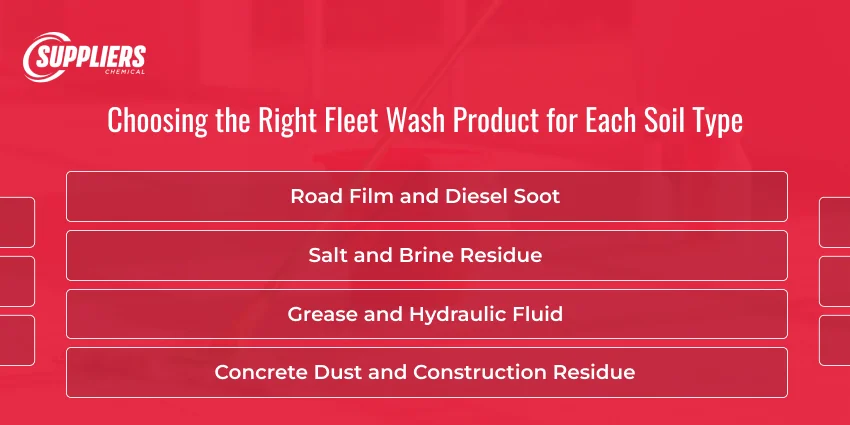
Not every contaminant responds to the same chemistry. A single product handles 80 percent of common road grime, but specialized soils need targeted solutions. Matching product to problem prevents rewashing and protects surfaces from damage.
Road Film and Diesel Soot
Road film is a sticky mix of tire dust, exhaust particulates, and petroleum residue that bonds to painted surfaces through heat and static charge. A concentrated alkaline fleet wash breaks that bond through surfactant action alone.
Professional fleet cleaning solutions are formulated for this soil type. They lift road film, diesel soot, and exhaust deposits in one pass, leaving surfaces streak-free and road-ready.
Salt and Brine Residue
Winter operations demand a different approach. Road salt and liquid brine leave crystalline deposits that trap moisture against metal surfaces, accelerating corrosion at weld joints and undercarriage components where damage is hardest to spot.
A salt removal product like Salt B Gone neutralizes chloride residue that standard wash products leave behind. Pairing it with a fleet wash keeps vehicles protected through winter.
Grease and Hydraulic Fluid
Heavy equipment fleets deal with hydraulic leaks, bearing grease, and engine oil overspray on a regular basis. These petroleum-based contaminants require a dedicated degreaser rather than a standard wash product.
The Super Concentrated Purple Degreaser cuts through heavy grease without harsh solvents that damage paint and rubber. It pairs with a fleet wash for a two-step clean.
Concrete Dust and Construction Residue
Fleets working construction sites bring back site dust, aggregate splatter, and form release oils. A concrete remover dissolves mineral deposits that alkaline wash products cannot touch.
Using a concrete dissolution product at the recommended dilution keeps painted surfaces safe while breaking down hardened cement splatter. A standard fleet wash finishes the job.
|
Not Sure Which Product Fits Your Fleet? Our team matches chemicals to your specific vehicles, routes, and soil types. |
Setting Up a Fleet Wash Routine That Scales with Growth
A wash routine that works for 10 trucks falls apart at 50 without the right systems in place. Scaling requires standardized products, documented dilution ratios, and a schedule tied to operational cycles rather than calendar dates.
Start with frequency based on route exposure. Over-the-road trucks running long-haul routes accumulate road film faster than local delivery vans. A tiered schedule allocates wash bay time where it creates the most value for your operation.
Standardize your chemical lineup from a single supplier. Running truck wash products, degreasers, and salt neutralizers from one platform ensures compatibility and simplifies crew training.
“Appearance is the first thing people notice about a fleet. A clean truck tells the customer that the company takes pride in its work and invests in proper maintenance across the board,” says Mike Faulkner, President of the Truck Renting and Leasing Association. (Source)
Read More About Salt Corrosion Protection for Fleets Using Chemical Solutions
Document everything from dilution ratios to rinse procedures. A written SOP that every wash bay operator can follow becomes critical when onboarding new staff or expanding to additional locations, where consistency protects your fleet’s finish.
Professional heavy-duty degreasers and wash products from the same supplier eliminate incompatibility risks, so there is zero chance of surface damage from mixing.
|
Ready to Build a Wash Program That Grows with You? We help fleet operators set up chemical programs from first truck to full fleet. |
Conclusion
A wash program built on professional-grade fleet cleaning solutions cuts labor time, protects every surface on your vehicles, and scales as your operation grows without added complexity.
Suppliers Chemical has spent 45 years helping fleet operators across the United States find the right chemistry for their vehicles. If you are ready to improve your wash program, get in touch today.
FAQ

Recommended articles
Commercial Floor Cleaner Guide: Pharma and Food Processing Facilities
Pharmaceutical and food processing facilities require commercial floor cleaners that pass regulatory scrutiny, leave no harmful residue on food-contact zone surfaces, and are validated or documented for compliance with FDA cGMP and HACCP standards. A commercial cleaning solution that works in a warehouse may fail a pharmaceutical audit if it isn’t compatible with cleanroom classification…
Fleet Cleaning Solutions: EPA Stormwater Rules & Compliant Chemicals
Fleet cleaning operations that discharge wastewater to storm drains, ditches, or surface water without an NPDES permit violate the Clean Water Act. Compliant fleet cleaning solutions use biodegradable formulas, and all wash runoff must either drain to the sanitary sewer with pretreatment approval or be collected through a closed-loop water recycling system. Most fleet managers…
Why Do Warehouses and Construction Sites Need Specialized Commercial Cleaning Solutions?
Commercial cleaning solutions for warehouses, distribution centers, and construction sites use engineered surfactant chemistry to break molecular bonds between contaminants and surfaces. Standard retail soaps cannot dissolve petroleum-based grease, concrete dust, hydraulic fluid, or tire marks that bond to industrial floors. Concentrated professional formulas address specific soil types in a single pass, reducing labor hours…