
Salt Corrosion Protection for Fleets Using Proven Chemical Solutions
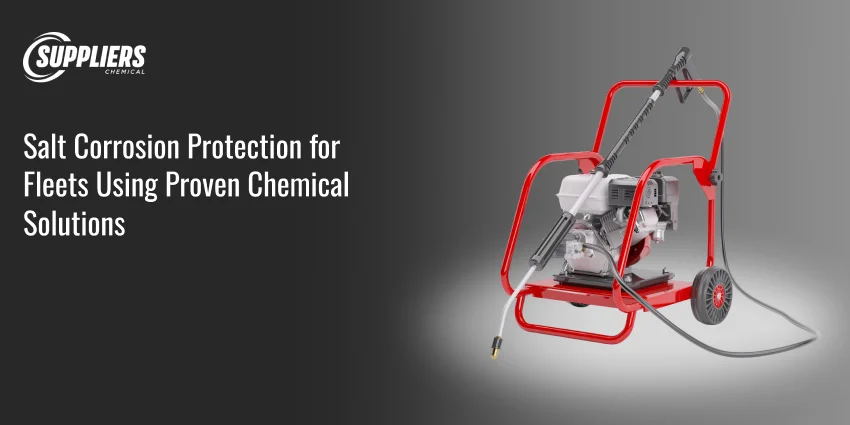
Every winter, commercial fleets across the USA face an invisible enemy. Road salt keeps highways safe, but it wages war on your vehicles long after the snow melts. Frame rails, brake lines, electrical connections, and undercarriage components suffer accelerated deterioration that standard washing simply cannot prevent.
For fleet managers operating in states like Virginia, Colorado, Missouri, and throughout the Midwest, effective salt corrosion protection isn’t optional—it’s essential for protecting significant capital investments. The difference between proactive chemical treatment and reactive repairs often amounts to thousands of dollars per vehicle over its service life.
This guide examines the science behind salt damage and the industrial-strength fleet cleaning solutions that actually work.
Understanding How Salt Destroys Fleet Vehicles
Road salt (sodium chloride) and its increasingly common alternatives—magnesium chloride and calcium chloride—create electrochemical reactions when they contact metal surfaces. This process accelerates dramatically when moisture is present, which explains why corrosion damage often worsens during the spring thaw rather than peak winter.
Why Standard Washing Falls Short
Regular fleet wash routines remove visible dirt and surface contamination. However, salt compounds migrate into seams, crevices, and protected areas where water spray cannot reach effectively. These deposits absorb atmospheric moisture, maintaining a corrosive environment year-round.
The most vulnerable areas include:
- Frame rails and crossmembers where salt accumulates in box sections
- Brake lines and fuel lines exposed beneath the vehicle
- Electrical connectors and ground points that cause intermittent failures
- Door bottoms and rocker panels where drainage holes trap debris
- Fifth wheel assemblies on tractor-trailers
Without targeted chemical cleaning protocols, these areas continue to corrode even duringthe summer months.
Chemical Rust Remover Products: What Actually Works
Not all rust treatment products deliver equal results. Understanding the chemistry helps fleet managers select solutions appropriate for their specific challenges.
Types of Industrial Rust Remover Formulations
Acid-based removers dissolve existing rust through a chemical reaction. Phosphoric acid formulations convert iron oxide into iron phosphate, creating a stable surface for protective coatings. These industrial cleaning chemicals require careful handling and proper neutralization.
Chelating agents bind to metal ions, lifting rust without aggressive acid action. These products work more slowly but pose less risk to surrounding surfaces and are often preferred for sensitive components.
Alkaline rust removers work through different chemistry, using high-pH solutions to break the bond between rust and base metal. Many commercial cleaning solutions combine alkaline cleaning with rust inhibitors for dual-action performance.
Application Considerations
Effective rust removal requires more than spraying product and hoping for results. Surface preparation, dwell time, and post-treatment protection all influence outcomes.
Professional-grade applications typically follow this sequence:
- Initial degreasing using an automotive degreaser to remove oil films that prevent rust remover penetration
- Rust treatment application with appropriate dwell time based on corrosion severity
- Mechanical assistance for heavy scale using brushes or pressure washing
- Neutralization rinse where required by product chemistry
- Protective coating application to prevent recurrence
Want expert guidance for safer, cleaner floors?
|
Building a Comprehensive Salt Protection Program
Reactive rust treatment addresses existing damage. Proactive protection prevents damage from occurring in the first place. The most effective fleet programs combine both approaches.
Prevention: The First Line of Defense
Consistent fleet wash schedules during salt season form the foundation of any protection program. However, frequency matters less than thoroughness. A weekly wash that includes proper undercarriage treatment outperforms daily surface washing that ignores hidden accumulation.
Key prevention strategies include:
- Undercarriage flush systems that direct high-pressure spray into frame cavities and protected areas
- Salt-neutralizing wash additives that chemically convert chloride compounds rather than simply rinsing them
- Post-wash corrosion inhibitors that leave protective films on vulnerable surfaces
- Drain hole maintenance ensuring moisture escape paths remain clear
For operations seeking a proven salt-neutralizing solution, Salt B Gone offers an effective option. This unique blend of organic acids dissolves and flushes out salt crystals and residue while depositing a coating of corrosion inhibitors to protect against rust formation. Safe for use on painted surfaces, aluminum, rubber, and plastic parts, Salt B Gone works across all vehicle types—from trucks and snowplows to salt spreaders and any equipment regularly exposed to road salt.
Treatment: Addressing Existing Damage
When prevention gaps allow corrosion to establish, targeted treatment becomes necessary. Industrial rust remover products can arrest progression and restore surface integrity when applied correctly.
Fleet managers should establish inspection protocols that identify early-stage corrosion before structural damage occurs. Spring inspections, after salt season ends, reveal damage that winter grime may have hidden.
Check Out Our Products: Floor Maintenance Products
Selecting Commercial Cleaning Solutions for Fleet Protection
The industrial cleaning market offers countless products claiming corrosion protection benefits. Evaluating options requires understanding your specific operating conditions.
Factors That Influence Product Selection
Geographic exposure varies significantly across the USA. Fleets operating in Georgia face different challenges than those running through Minnesota winters. Product selection should match actual salt exposure levels.
Vehicle composition matters enormously. Aluminum components require a different treatment chemistry than steel. Mixed-metal vehicles need products safe for all surfaces present.
Operational constraints, including wash facility capabilities, water quality, and environmental discharge requirements, all influence viable product options.
Application frequency determines whether concentrated products or ready-to-use formulations provide better value.
Beyond Products: The System Approach
Effective chemical cleaning for corrosion protection requires viewing products as components within a larger system. Water temperature, pressure settings, contact time, and application sequence all influence results. Products that perform excellently in one facility may disappoint in another due to system differences.
This reality underscores why on-site assessment delivers better outcomes than simply ordering products based on catalogue descriptions.
Not sure which floor chemicals suit your space? |
Conclusion: Protect Your Fleet Investment With Expert Support
Salt corrosion represents one of the most preventable causes of premature fleet vehicle retirement. The right combination of fleet cleaning solutions, rust treatment products, and protective protocols can add years of service life to your equipment.
Suppliers Chemical provides industrial-strength corrosion protection solutions designed specifically for commercial fleet operations across the USA. We go beyond product delivery—our team conducts comprehensive on-site assessments to evaluate your vehicles, operating conditions, wash facilities, and current maintenance protocols.
From there, we develop customized protection programs combining the right automotive degreaser products, specialized rust treatment chemicals like Salt B Gone, and ongoing maintenance recommendations tailored to your fleet’s specific needs. Our chemical cleaning expertise helps operations teams nationwide protect their vehicle investments, reduce unplanned downtime, and extend asset service life.
Don’t let salt corrosion shorten your fleet’s lifespan. Contact Suppliers Chemical today for a consultation and discover how targeted protection programs deliver measurable results—engineered for performance, every time.
FAQs
Recommended articles
Fleet Wash Chemicals Guide: Degreasers, Power Wash & Protection
When operating a commercial fleet, you deal with road grime, traces of diesel, and salt corrosion on a daily basis throughout the seasons. Routine truck wash soaps are ineffective against the heavy layers of grime and road salts on fleet vehicles. This is when specialized washing products and soaps are needed. Whether you have delivery…
Guide: Using Black-Off, Glory & Purple Degreasers for Fleet Maintenance
When performing fleet maintenance, the most important oils, road grime, dust, grease, and grime buildup need to be removed using the most effective degreasers. Knowing when to use Black-Off, Glory, or Purple Degreasers in MT Business Technologies’ Franchise Maintenance Division and Fleet Maintenance Services will achieve desired results. This will help eliminate equipment damage and…
Industrial Floor Cleaners to Cut Downtime and Boost Workplace Safety
When it comes to how clean the floor is in industrial workplaces, it can almost dictate how efficiently a company operates. In every second of production downtime, a company loses money. Each slip and fall incident directly impacts how safe workers feel on the job and turns into a liability for the company. The industrial…