
Fleet Pressure Washing Solutions: Chemicals vs Water-Only Washing
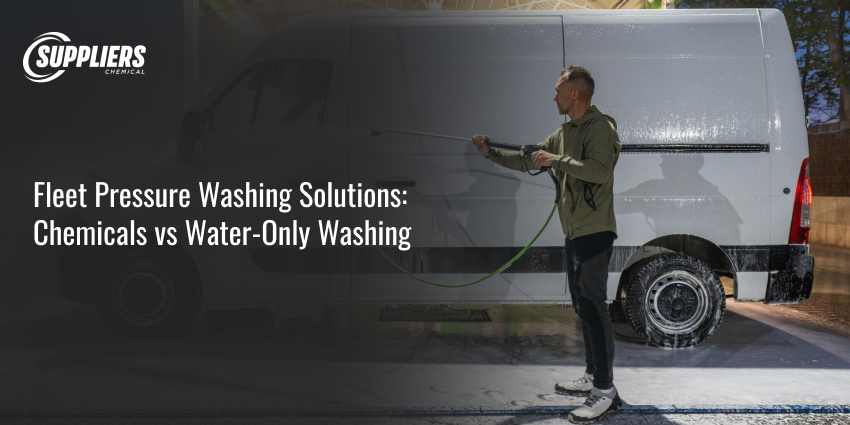
There’s an ongoing debate in commercial fleet maintenance that deserves a closer look. Some operations swear by water-only pressure washing, claiming it’s simpler, cheaper, and gets the job done. Others invest in professional fleet cleaning solutions with specialized truck wash chemicals. So which approach actually protects your vehicles and delivers results worth the investment?
After working with fleet managers across the United States, we’ve seen both methods in action. The short answer is this: water alone can rinse away loose dirt, but it can’t touch the petroleum-based grime, salt deposits, and stubborn contaminants that actually damage commercial vehicles. Let’s break down exactly why that matters for your operation.
The Limits of Water-Only Pressure Washing
Water is powerful. A commercial pressure washer pushing 3,000 PSI can blast loose mud off a truck bed in seconds. But here’s what water can’t do physically: break molecular bonds.
Road film, diesel exhaust residue, and grease deposits don’t just sit on top of your vehicle surfaces. They bond chemically to paint, metal, and plastic. Water molecules lack the surfactant properties needed to break those bonds and lift contaminants away. You might knock off the surface layer, but you’re leaving behind the microscopic deposits that cause long-term damage.
Salt corrosion prevention for fleets is where this limitation becomes especially costly. When your trucks run through winter roads treated with salt and brine, those chloride compounds don’t rinse away with plain water. They cling to undercarriage components, frame rails, and wheel wells. Without proper fleet wash detergents that neutralize and remove salt, corrosion starts within 48 hours of exposure.
Think about what your vehicles encounter daily. Logistics fleet washing has to address road grime removal from highway miles. Construction vehicle cleaning deals with concrete dust, hydraulic fluid, and job site debris. Bus fleet cleaning tackles exhaust soot and passenger area contamination. Water alone isn’t equipped for any of these challenges.
Read More About: Salt Corrosion Protection for Fleets Using Proven Chemical Solutions
How Chemical-Enhanced Washing Actually Works
Commercial fleet cleaning solutions are engineered to do what water can’t. They contain surfactants that break the bond between contaminants and vehicle surfaces. Alkaline fleet cleaners dissolve petroleum-based deposits. Corrosion protection chemicals neutralize salt and create temporary barriers against oxidation.
Take Fleet Wash from Suppliers Chemical as an example of what a properly formulated truck fleet cleaning solution should deliver. It’s a concentrated premium liquid specifically developed to remove exhaust deposits, road film, and bug residues from painted surfaces. The application is straightforward: dilute, apply, rinse away. No brushing required. That last part matters because it means less labor, less time, and less risk of scratching paint or graphics.
What makes this type of heavy-duty vehicle cleaner different from consumer car wash soap? Several things:
- Powerful cleaning action that handles diesel soot, grease, and embedded dirt
- High-foaming formula that clings to vertical surfaces for maximum dwell time
- Safe on all vehicle surfaces, including painted metal, plastic, rubber, and glass
- Concentrated formulation that reduces product usage and lowers per-wash costs
- Streak-free rinse that leaves no residue or water spots
These aren’t marketing features. They’re functional requirements for any fleet washing solutions in the USA handling semi-trucks, trailers, buses, and heavy equipment.
|
Need Help Choosing the Right Products? Suppliers Chemical provides consultation to match industrial fleet cleaning solutions with your specific vehicle types and operating conditions. |
The Real Cost Comparison
Fleet managers who stick with water-only washing often cite cost savings. No chemical purchases, simpler equipment, faster turnaround. But this calculation ignores the expenses that show up later.
Commercial vehicle washing with proper truck wash chemicals prevents corrosion damage that leads to premature component replacement. Brake assemblies, suspension parts, and frame rails all last longer when salt and road grime are properly removed. A winter fleet wash solutions program running a few hundred dollars monthly per vehicle can prevent thousands in repairs over that truck’s lifespan.
There’s also the labor equation to consider. Water-only washing typically requires manual scrubbing to remove stubborn deposits. Professional fleet cleaning solutions like Fleet Wash offer brushless cleaning options when used with pressure washers and foam cannons at proper concentrations. That means faster wash cycles and lower labor costs per vehicle.
For high-volume fleet washing operations running dozens or hundreds of trucks through wash bays weekly, those time savings compound quickly. Bulk fleet cleaning solutions purchased in larger quantities, whether 5-gallon pails, 55-gallon drums, or 275-gallon totes, reduce your per-gallon costs even further.
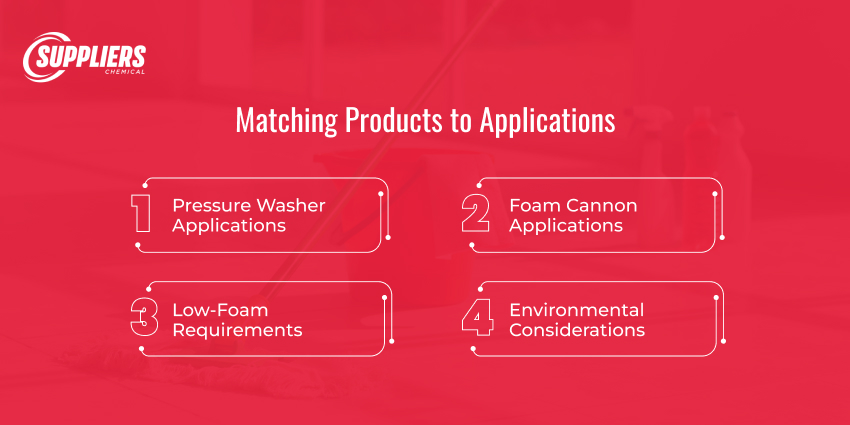
Matching Products to Applications
Not every fleet wash solution works identically, and product selection should match your specific operation. Here’s how different formulations serve different needs.
Pressure Washer Applications
When using fleet pressure washing solutions with mechanical equipment, you need products that work at specific dilution ratios. Fleet Wash, for instance, operates at 5 to 7 ounces per gallon for corrective cleaning of heavy buildup and 3 to 4 ounces per gallon for routine preventative maintenance. These concentrated ratios stretch your product further while delivering consistent results.
Foam Cannon Applications
Mobile fleet cleaning solutions often rely on foam cannons to maximize chemical contact time on large vehicle surfaces. High-foaming formulas produce thick, clinging foam that doesn’t run off vertical trailer sides immediately. Fleet Wash operates at 4 to 6 ounces per gallon for corrective foaming and 2 to 3 ounces for maintenance applications.
Low-Foam Requirements
Some high-volume fleet washing operations use reclaim water systems and automatic wash equipment that require low-foam fleet detergents. Excessive foam creates problems in these enclosed systems. Matching your product choice to your equipment prevents operational headaches.
Environmental Considerations
Operations near waterways or in regulated areas need biodegradable fleet cleaning Solutions that meet discharge requirements. EPA-compliant fleet cleaners have improved dramatically and now deliver industrial-strength performance while satisfying environmental standards. Many fleet cleaning services for businesses have transitioned to biodegradable formulations entirely.
Building Effective Fleet Washing Protocols
Whether you’re handling delivery vehicle cleaning for a regional distributor or truck fleet washing for a national carrier, consistent protocols matter more than occasional deep cleans.
Scheduled fleet cleaning programs should address exterior washing weekly or bi-weekly, depending on operating conditions. Undercarriage cleaning for fleets deserves special attention during the winter months when road salt accumulates in hidden areas. On-site fleet cleaning with mobile truck wash systems works well for distributed operations that can’t centralize vehicles at a single wash facility.
The goal is to prevent contamination buildup rather than fighting it after damage starts. Grease and oil removal from vehicles becomes increasingly difficult the longer those deposits remain on surfaces. Road grime that sits for weeks bonds more aggressively than fresh contamination. Regular washing with appropriate fleet maintenance cleaning solutions in USA keeps vehicles in better condition with less effort over time.
When Water-Only Might Work (And When It Won’t)
Let’s be fair. There are limited situations where water-only pressure washing makes sense. A quick rinse between more thorough chemical washes can knock off loose surface dirt. Vehicles operating in dry climates without winter salt exposure face less corrosion risk. Some maintenance budgets genuinely can’t accommodate any chemical purchases.
But for commercial fleets operating through real-world conditions, particularly anywhere in the northern or coastal United States where salt exposure is common, fleet wash solutions aren’t optional. They’re essential protection for valuable equipment.
Vehicle fleet cleaning solutions designed for commercial applications address challenges that consumer products can’t handle. Fleet sanitation solutions for foodservice delivery vehicles meet hygiene standards that water alone never could. Heavy-duty fleet cleaning solutions for construction equipment remove the combination of mud, fuel, and hydraulic contamination that water barely dents.
The comparison isn’t really water versus chemicals. It’s adequate protection versus inadequate protection.
Conclusion
The chemicals versus water-only debate has a clear answer for commercial fleet operations. Water can rinse surfaces, but it cannot protect your investment. Industrial fleet cleaning solutions break down the contaminants that cause corrosion, preserve paint systems, and keep your vehicles operating longer with fewer maintenance issues.
For fleet managers running operations anywhere in the United States, the question isn’t whether to use professional fleet cleaning solutions. It’s which products match your specific vehicles, equipment, and operating conditions. That decision determines whether your maintenance program protects your fleet or just makes it temporarily wet.
Suppliers Chemical delivers industrial-strength cleaning formulations for commercial fleets, construction equipment, and transportation operations nationwide. Our Fleet Wash and complete line of heavy-duty degreasers, fleet wash solutions, and corrosion protection products are engineered for the challenges commercial vehicles actually face. We offer on-site consultations to evaluate your current fleet washing protocols and recommend customized solutions that deliver measurable results. Connect with our team today to discuss your operation.
FAQs
Recommended articles
How Do Commercial Fleet Cleaning Solutions Protect Vehicle Lifespan?
Your trucks are out there taking a beating every single day. Between the salt-covered highways in winter, the road grime that clings to every surface, and diesel exhaust coating your trailers, it’s a constant battle against the elements. And here’s what catches most fleet managers off guard: the cleaning products sitting in your maintenance bay…
Construction Site Cleaners: Effective Solutions for Concrete & Grime
Construction sites are brutal environments for cleanliness. Concrete dust, hydraulic fluid leaks, grease buildup on heavy machinery, and stubborn stains that seem permanently bonded to surfaces—standard cleaning products simply cannot handle these challenges. Construction supervisors across the United States understand this frustration all too well. The reality is straightforward: construction site maintenance chemicals must work…
Freezer Cleaners For Foodservice Operations: Safe, Effective, Compliant
Anyone managing a foodservice operation knows the drill—commercial freezers collect frost, grease residue, and organic buildup that standard cleaners simply cannot handle. Walk-in units and cold storage areas demand specialized attention because what works at room temperature fails miserably in freezing conditions. Finding commercial freezer cleaners that perform reliably while meeting strict food safety requirements…