
How Do Commercial Fleet Cleaning Solutions Protect Vehicle Lifespan?
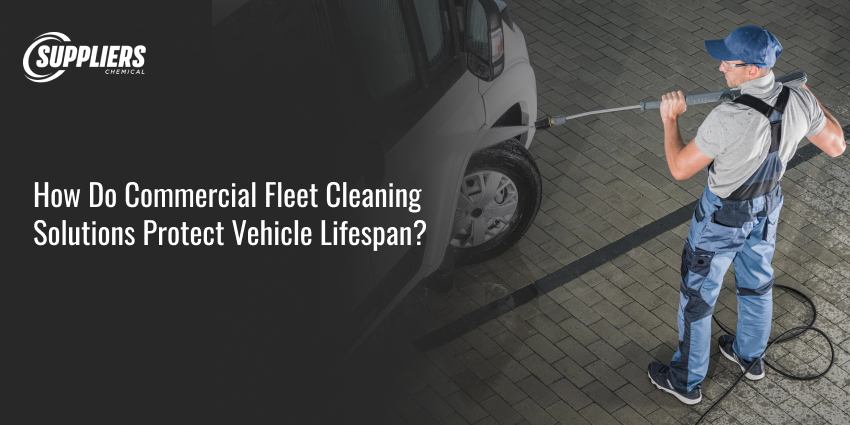
Your trucks are out there taking a beating every single day. Between the salt-covered highways in winter, the road grime that clings to every surface, and diesel exhaust coating your trailers, it’s a constant battle against the elements. And here’s what catches most fleet managers off guard: the cleaning products sitting in your maintenance bay might actually be making things worse.
Standard consumer car wash soaps weren’t built for what commercial vehicles face. A delivery truck running routes through Chicago or Denver winters encounters road salt concentrations that can eat through protective coatings within weeks. Construction vehicles working job sites accumulate concrete dust, hydraulic fluid, and debris that off-the-shelf detergents simply can’t handle. That’s where industrial fleet cleaning solutions come into play, and understanding the difference could save you thousands in premature repairs.
The reality is straightforward. Commercial Fleet Cleaning Solutions USA does far more than keep your vehicles looking professional. They actively fight corrosion, preserve paint systems, and extend the operational life of equipment that probably represents one of your largest capital investments.
Why Your Current Cleaning Protocol Might Be Failing
Let’s talk about what’s actually happening when you wash a commercial vehicle with the wrong products. Consumer-grade cleaners leave behind residues that attract more dirt. They don’t break down the heavy petroleum deposits that accumulate on working trucks. Worst of all, they provide zero protection against the corrosive elements your fleet encounters daily.
Heavy-duty vehicle cleaners formulated for commercial applications work differently. Products like Fleet Wash from Suppliers Chemicals are concentrated premium liquid formulations specifically developed to remove exhaust deposits, road film, and bug residues from painted surfaces. The difference shows up immediately. Dilute, apply, and rinse away. No brushing required. That’s the kind of efficiency fleet maintenance cleaning solutions should deliver.
What makes fleet wash chemicals effective for commercial applications? It comes down to chemistry. Quality fleet wash detergents contain surfactants that break the bond between grime and vehicle surfaces. Alkaline fleet cleaners tackle petroleum-based deposits that water alone can’t touch. And the best formulations rinse clean without leaving streaks or water spots that make your trucks look worse than before you washed them.
|
Need a Fleet Cleaning Assessment? Every operation faces unique challenges. Suppliers Chemical offers consultation to identify your specific cleaning requirements and match you with the right products. |
The Salt Corrosion Problem Nobody Wants to Talk About
Salt corrosion prevention for fleets isn’t optional if you’re operating anywhere that sees winter weather. During cold months, road crews across the United States dump millions of tons of salt and brine solutions onto highways. Your vehicles drive through it, and that corrosive material settles into every crack and crevice of your undercarriage, wheel wells, and frame rails.
Here’s what happens if you ignore it. Salt attracts moisture from the air. That moisture combines with oxygen and exposed metal to accelerate rust formation. We’re talking visible corrosion within 48 to 72 hours of heavy salt exposure if you don’t intervene.
Winter fleet wash solutions tackle this problem from two angles. First, they physically remove salt deposits before the corrosion process begins. Second, quality corrosion protection chemicals contain inhibitors that neutralize chloride ions and create a temporary protective barrier on metal surfaces.
Undercarriage cleaning for fleets deserves special attention because that’s where the worst damage happens out of sight. Fleet managers often don’t realize there’s a problem until structural components fail inspection. If you’re running trucks through salt-treated roads, weekly undercarriage treatment during winter months isn’t excessive. It’s necessary.
Read More About: Fleet Wash Chemicals Guide: Degreasers, Power Wash & Protection
Choosing the Right Products for Your Operation
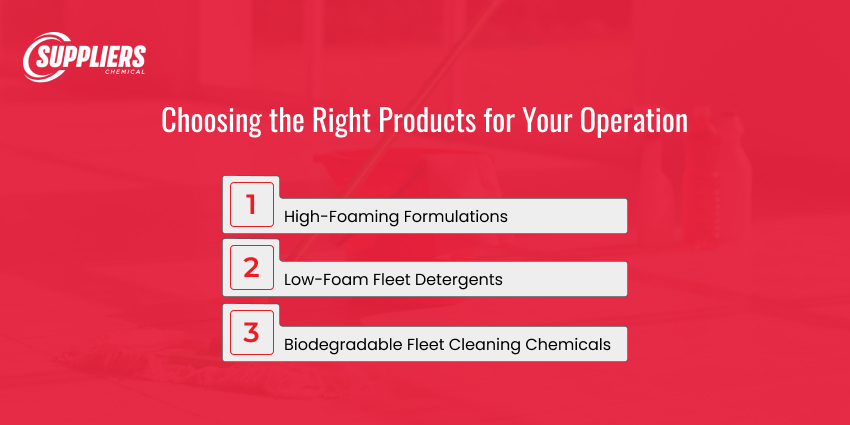
Not every fleet wash solution works the same way, and product selection should match your specific vehicles, operating conditions, and environmental requirements. Let’s break down the options.
High-Foaming Formulations
Products with high-foaming formulas produce thick, clinging foam that maximizes dwell time on vertical surfaces. This matters when you’re trying to clean the sides of trailers or the cabs of semi-trucks. Fleet Wash, for example, delivers powerful cleaning action through its high-foaming formula while remaining safe on all vehicle surfaces, including painted metal, plastic, rubber, and glass.
For truck fleet washing operations handling semi-trucks, trailers, buses, and heavy equipment, this type of formulation removes road film and dirt without scrubbing when applied with adequate pressure. That translates to faster wash times and lower labor costs.
Low-Foam Fleet Detergents
High-volume fleet washing operations often prefer low-foam fleet detergents that work efficiently with reclaim water systems and automatic wash equipment. Foam looks impressive but creates problems in commercial washing systems. Low-foam alternatives clean effectively while allowing faster rinse cycles.
Biodegradable Fleet Cleaning Chemicals
Operations near waterways or in environmentally sensitive areas need EPA-compliant fleet cleaners that meet federal discharge requirements. Modern biodegradable fleet cleaning chemicals have come a long way. They deliver industrial-strength cleaning performance while satisfying environmental regulations. Many fleet cleaning services for businesses now use biodegradable formulations exclusively.
Building a Fleet Washing Protocol That Works
Random cleaning doesn’t protect your investment. You need scheduled fleet cleaning programs that address every surface consistently. Here’s what an effective protocol looks like.
Regular Exterior Maintenance
Bus fleet cleaning, delivery vehicle cleaning, and logistics fleet washing all follow similar principles. Remove surface grime and light salt deposits weekly using pressure washer application or manual scrubbing methods. For corrective cleaning with heavier buildup, stronger dilution ratios get the job done. For preventative maintenance washes, lighter concentrations work fine.
Fleet Wash works at 5 to 7 ounces per gallon for corrective cleaning and 3 to 4 ounces per gallon for routine maintenance. Those concentrated ratios mean bulk fleet cleaning solutions stretch further, reducing your per-wash costs significantly.
Undercarriage Treatment
Salt corrosion prevention requires direct attention to hidden areas. Mobile truck wash systems and fleet pressure washing solutions should include undercarriage treatment that reaches frame rails, suspension components, and brake assemblies where salt accumulates.
Construction and Heavy Equipment
Construction vehicle cleaning presents unique challenges because of the combination of mud, concrete, hydraulic fluids, and general job site debris these machines encounter. Heavy-duty fleet cleaning solutions formulated for grease and oil removal from vehicles handle these demanding applications.
|
Looking for Bulk Pricing? Suppliers Chemical offers Fleet Wash in 5-gallon pails, 55-gallon drums, and 275-gallon totes for high-volume operations. |
What Skipping Maintenance Really Costs You
Fleet managers sometimes view commercial vehicle washing as an optional expense. That’s a perspective that catches up with you in maintenance budgets within two or three years.
Think about what happens when road grime removal gets neglected:
- Brake components corrode and require premature replacement
- Frame rails weaken, creating safety inspection failures
- Electrical connections fail due to corrosion buildup
- Paint systems deteriorate, tanking resale values
- Wheel bearings and seals wear faster from trapped debris
Vehicle fleet cleaning solutions cost a fraction of the repairs they prevent. A scheduled fleet cleaning program running a few hundred dollars monthly per vehicle easily prevents five to fifteen thousand dollars in corrosion-related repairs over a truck’s useful life.
On-Site vs. Mobile Fleet Cleaning Options
Your operation’s size and location determine which approach makes the most sense.
On-site fleet cleaning works well for operations with dedicated wash bays and water treatment infrastructure. You control scheduling, product selection, and quality standards. Professional fleet cleaning solutions, available throughout the USA, help reduce per-wash costs when purchased in bulk.
Mobile fleet cleaning services bring equipment and chemicals directly to your vehicles. This works for distributed operations, construction sites, and fleets that don’t have fixed wash facilities. Modern mobile fleet cleaning solutions handle everything from delivery vans to heavy equipment.
Both approaches require quality fleet sanitation solutions and proper chemical selection. The difference lies in logistics and capital investment, not cleaning effectiveness.
Conclusion
Your fleet vehicles represent a serious capital investment. Every truck, trailer, and piece of construction equipment you operate needs protection from the corrosive conditions they encounter daily on roads across the United States.
Industrial fleet cleaning solutions aren’t just about appearances. They actively extend vehicle lifespan, reduce maintenance costs, and prevent the kind of rust damage that takes trucks out of service years earlier than they should. The right truck fleet cleaning solutions, applied consistently through scheduled fleet cleaning programs, protect your investment far longer than neglected vehicles can last.
Don’t wait for rust to appear on inspection reports. Build a fleet washing protocol now that addresses your specific vehicles and operating environment.
Suppliers Chemical delivers industrial-strength cleaning chemicals for commercial fleets, construction equipment, and transportation operations throughout the United States. Our fleet wash and full line of heavy-duty degreasers, fleet wash solutions, and corrosion protection products tackle the toughest commercial cleaning challenges. We provide on-site assessments to evaluate your cleaning protocols and recommend solutions engineered for your specific fleet. Get your custom consultation today.
FAQs
Recommended articles
Fleet Pressure Washing Solutions: Chemicals vs Water-Only Washing
There’s an ongoing debate in commercial fleet maintenance that deserves a closer look. Some operations swear by water-only pressure washing, claiming it’s simpler, cheaper, and gets the job done. Others invest in professional fleet cleaning solutions with specialized truck wash chemicals. So which approach actually protects your vehicles and delivers results worth the investment? After…
Construction Site Cleaners: Effective Solutions for Concrete & Grime
Construction sites are brutal environments for cleanliness. Concrete dust, hydraulic fluid leaks, grease buildup on heavy machinery, and stubborn stains that seem permanently bonded to surfaces—standard cleaning products simply cannot handle these challenges. Construction supervisors across the United States understand this frustration all too well. The reality is straightforward: construction site maintenance chemicals must work…
Freezer Cleaners For Foodservice Operations: Safe, Effective, Compliant
Anyone managing a foodservice operation knows the drill—commercial freezers collect frost, grease residue, and organic buildup that standard cleaners simply cannot handle. Walk-in units and cold storage areas demand specialized attention because what works at room temperature fails miserably in freezing conditions. Finding commercial freezer cleaners that perform reliably while meeting strict food safety requirements…